North Korea

North Korea, officially known as the Democratic People's Republic of Korea (DPRK), is located in East Asia, occupying the northern part of the Korean Peninsula. The country shares borders with China and Russia to the north, and South Korea to the south, with the Korean Demilitarized Zone (DMZ) serving as a buffer. North Korea covers an area of approximately 120,540 square kilometers, characterized by its mountainous terrain and limited arable land. The country experiences a continental climate, with distinct seasons marked by warm summers and cold, dry winters, influencing both agricultural practices and daily life.
The population of North Korea is estimated to be around 25 million people, with the capital city, Pyongyang, serving as the political, cultural, and economic center. The populace is largely homogeneous, with Korean being the dominant ethnic group and language. Structured around a centralized government, North Korea's society emphasizes collectivism, and its citizens are known for their strong sense of national identity and pride. Education and military service are integral aspects of life, with the latter being a significant part of the country's socio-political fabric.
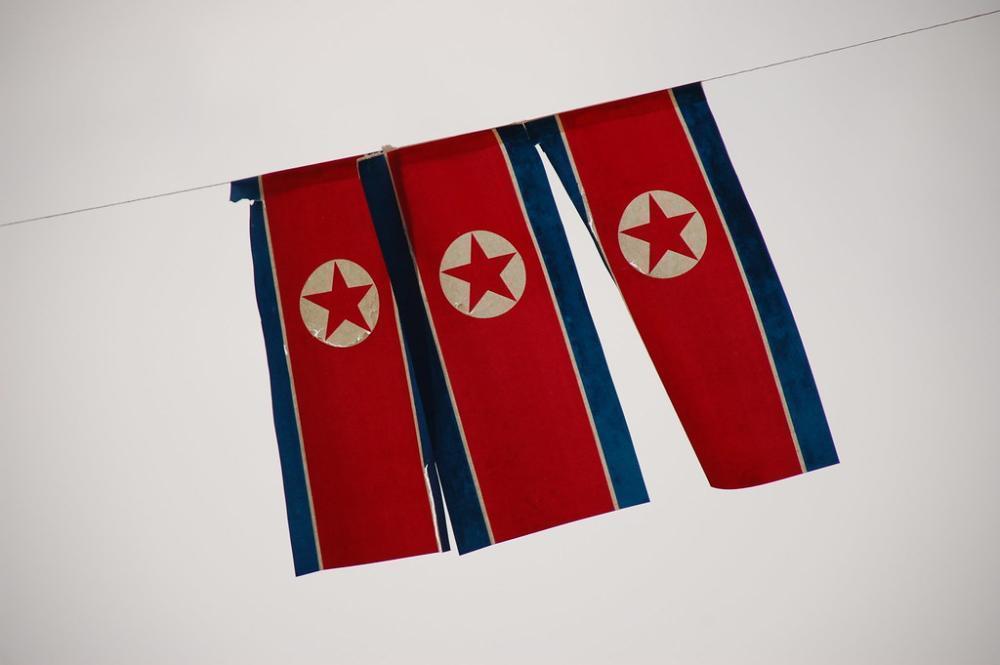
North Korea's flag is deeply symbolic, featuring a central red panel flanked by blue horizontal stripes and bordered by thin white strips. Within the red panel, a white circle with a five-pointed red star symbolizes the country's commitment to socialism. The color red represents revolution and patriotic spirit, while blue stands for sovereignty, peace, and friendship. The white stripes represent purity and traditional Korean heritage. This flag embodies the ideological underpinnings of the state, showcasing its focus on self-reliance and unity.
Customs and traditions in North Korea are heavily influenced by ideological doctrines, with significant emphasis on communal activities and state-sponsored events. Traditional Korean holidays, such as the Lunar New Year and Chuseok (harvest festival), are celebrated, but national holidays like the Day of the Sun and Foundation Day play a pivotal role in societal activities, reflecting the importance of political culture. Life in North Korea is also marked by cultural endeavors such as music, dance, and art, which are often imbued with patriotic themes. These cultural elements, alongside government-driven customs, provide a unique window into the complexities of North Korean society, illustrating both its cultural heritage and contemporary ideological landscape.